
Ensuring smooth passenger flow while guaranteeing a high level of airport security and confidentiality is a major strategic concern for airport operators. The complexity of this task seems to be increasing, particularly due to the continuous growth in passenger numbers and the gradual saturation of traditional security measures.
With a view to optimising operations, new technologies have been integrated to reinforce existing systems. In this race for efficiency, AI is stepping in. It is establishing itself as a major lever for improving airport security and privacy. However, its use also raises fundamental questions about the protection of personal data.
A key question therefore arises for users: if artificial intelligence improves airport security, how does it guarantee data privacy ?
Airport security and confidentiality in the face of changes in air transport
We know that the emergence of AI has taken a completely different turn in many sectors, including air transport. Its deployment is causing both concern and growing adoption, particularly in areas related to flow management, security and operational optimisation.
At the same time, airport security and privacy measures have undergone a major evolution. Traditional controls, such as baggage inspection and metal detectors, have been gradually reinforced by advanced technologies.
The objective is clear : to strengthen controls, limit the risk of incidents and reassure travellers throughout their journey.
Thanks to this additional equipment, manual checks have become more efficient. Security operations are now better coordinated, faster and better adapted to the increase in passenger traffic, while contributing to better overall management of airport infrastructure.
How artificial intelligence enhances airport security
Enhanced threat detection and real-time analysis
Artificial intelligence-based security systems are capable of analysing vast amounts of data in real time. This information comes from sources such as counting cameras, smart sensors and flight route data.
Thanks to this continuous analysis, airports can identify risky situations more quickly. Unusual behaviour, abnormal movements or atypical movement patterns can trigger alerts. Security personnel are then able to intervene without delay.
According to the European Union Aviation Safety Agency, AI is a relevant lever for enhancing aviation safety (EASA). Provided that it remains subject to human supervision and strict data governance rules.
Predictive analysis and risk anticipation
Beyond immediate detection, artificial intelligence also makes it possible to anticipate risks. By analysing historical data and past trends, suspicious behaviour patterns or sensitive areas can be identified.
Such an approach allows airports to adapt their security measures in advance. Resources are mobilised in a targeted manner, where they are really needed. This strengthens airport security and confidentiality in a sustainable manner, while limiting operational disruptions and the risk of incidents.
Security measures tailored to risk profiles
AI also offers the possibility of implementing differentiated security protocols based on predefined risk levels. Certain passengers, particularly frequent travellers who have undergone thorough checks, can benefit from simplified controls.
Put simply, the aim is to exclude low-risk individuals so as not to spoil their travel experience. This reduces the burden on the majority of travellers.
Conversely, additional checks can be applied when specific signals are detected.
This risk-based approach improves the overall efficiency of checks while maintaining the smooth flow of passenger traffic. It plays a key role in striking a balance between airport security and privacy.
Airport security and privacy : an essential balance
Despite its many advantages, artificial intelligence raises legitimate concerns about privacy.
Data privacy
The systems deployed rely on the processing of sensitive data, whether operational information, flow data or travel history.
Securing this data is therefore a top priority. Airports must guarantee secure storage, controlled access and strictly regulated use of the information collected. Also, compliance with current regulations, in particular the GDPR, is essential to ensure airport security and confidentiality.
In addition, regular audits and control mechanisms reinforce system compliance and help to build trust among passengers.
Transparency, fairness and respect for individual freedoms
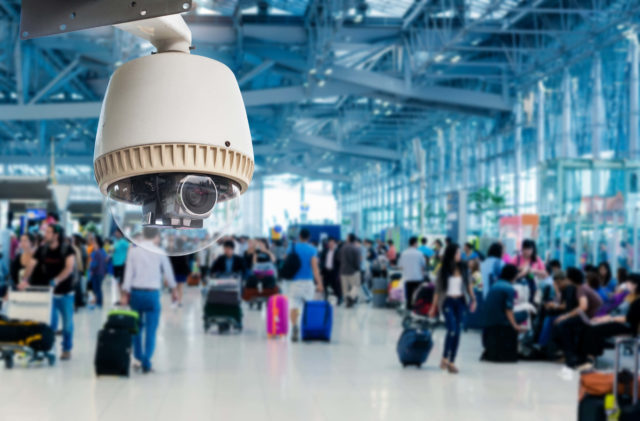
Transparency plays a key role in the acceptance of security technologies. Moreover, passengers must be clearly informed about the use of automated devices and the conditions under which their data is processed. Accessible and understandable policies promote this relationship of trust.
In addition, algorithms must be regularly tested to avoid bias or discriminatory treatment. Continuous monitoring, combined with frequent audits and adjustments, ensures that devices are fair and respect fundamental rights.
Opt-out options
Finally, an opt-out option must be offered. Passengers who do not wish to use certain automated technologies can then opt for traditional checks. As a result, this flexibility respects individual choice while maintaining a high level of airport security and confidentiality, even though additional security checks using traditional methods are required.
Use case : optimising security areas with AI
In many airports, managing security areas is a critical issue. Successive delays can quickly create a domino effect :
- Congestion at checkpoints
- Longer queues
- Increased pressure on staff
- Deterioration of the passenger experience
To address these situations, some airports are now deploying artificial intelligence solutions dedicated to analysing and optimising passenger flows, particularly in security and immigration areas.
These systems use flow counting and analysis technologies capable of measuring passenger density, queue length and flow dynamics upstream of security checks in real time.
Thus, when a risk of saturation is detected, the system does not simply make an observation, it also offers operational recommendations such as :
- Opening additional lines
- Reallocating human resources
- Partially redirecting passengers to alternative checkpoints
This allows airport managers to anticipate congestion rather than suffer from it.
Confidentiality and security
In terms of confidentiality, these solutions are based on an approach that strictly respects personal data. The technologies used, particularly computer vision, operate on the principles of anonymisation. No faces are recognised and no identities are stored. Furthermore, the devices are 100% compliant with regulatory requirements (GDPR). The effectiveness of these technologies is also enhanced by the merging of data from multiple sources :
- Counting sensors
- Flight schedules
- Checkpoint status
- Zone occupancy data
- Internal operational information
Most acceptable AI in airports is not the one that recognises faces, but the one that understands flows.
Real case : deployed system
A particularly the case at Amsterdam Schiphol, which has deployed intelligent passenger flow analysis solutions to optimise security check areas. These devices are based on counting and density analysis technology that measures visitor numbers in real time.
London Heathrow also uses artificial intelligence solutions to optimise passenger flow management in its terminals, security checkpoints and border control areas. AI is used to analyse space occupancy, predict congestion and recommend operational actions in real time.
In conclusion, artificial intelligence is now establishing itself as a key tool for enhancing airport security and confidentiality. By improving threat detection, anticipating risks and optimising flow management, it enables airports to meet the growing demands of modern air transport.
However, its deployment must be strictly regulated. Data protection, transparency of systems and respect for individual freedoms must remain at the heart of security strategies.
For more information, click here