
How to optimize circulation, safety and visitor experience
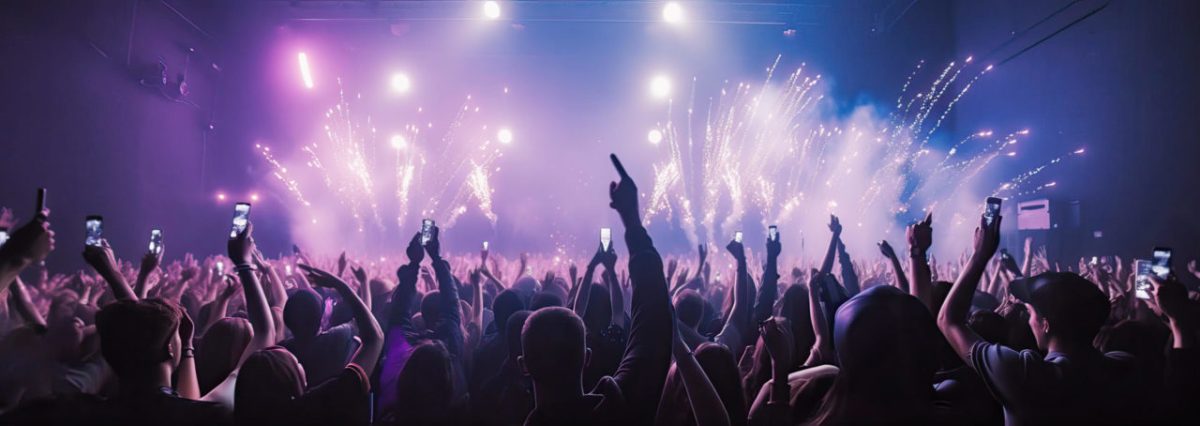
The warm months are back, and with them comes festival season. As lots of events are unveilling their line-ups, tens of thousands of festival-goers prepare for unforgettable outdoor experiences.
But behind this excitement lies a major operational challenge: managing people flows at music festivals.
At large-scale events, crowd movements can quickly become difficult to control if spaces, access points and visitor circulation are not properly anticipated. When well managed, crowd flow management at festivals enhances the festival visitor experience, improves movement across the site and strengthens overall crowd safety at events. When overlooked, it can lead to long queues, congestion and high-risk situations.
Why crowd flow management matters at festivals
Crowd flow management at festivals is a core component of large-scale event crowd management.
First, it directly impacts the visitor experience. By reducing waiting times and improving visitor circulation, organizers can create a smoother and more intuitive journey. Effective visitor flow optimization allows attendees to move freely across the site and fully enjoy the event.
Second, it plays a key role in crowd safety. By monitoring capacity limits and occupancy levels in real time, organizers can anticipate risks, prevent dangerous crowd movements and react quickly if needed.
A well-designed strategy combines crowd control, real-time attendance monitoring and data-driven event management to ensure both comfort and safety.
Key challenges in festival crowd management
Managing visitor flows at festivals involves several operational challenges.
One of the most critical is high attendance. Entrances, main stages and food zones often become critical areas where congestion builds quickly if not properly managed.
Queue management at festivals is another major issue. Poorly organized queues at entry points, bars or restrooms can disrupt pedestrian flow and negatively impact attendee satisfaction.

Finally, event evacuation planning is essential. Organizers must define:
- clearly accessible emergency exits,
- efficient access and egress routes,
- alternative pathways to support crowd dispersion,
- a structured festival site circulation plan.
Pre-event planning and crowd flow modeling
Effective festival traffic management starts before the event even begins.
Organizers must assess:
- expected attendance (headcount forecast),
- site layout and infrastructure,
- high-attraction zones such as stages or food courts.
Using crowd movement modeling and foot traffic analytics, it becomes possible to anticipate bottlenecks, optimize visitor distribution and improve overall event operations.
This phase is critical to reducing congestion and ensuring efficient festival logistics.
The role of technology in crowd flow analysis
Technology is now central to data-driven crowd management at festivals.
Tools such as:
- online ticketing systems,
- mobile apps,
- and crowd monitoring platforms
enable organizers to:
- track real-time attendance,
- analyze crowd flow data,
- improve congestion management at festivals.
These technologies support faster decision-making and better crowd risk management, especially during peak times.
Real-time people counting systems
People counting at festivals is one of the most effective ways to monitor and optimize crowd flows.
Sensors installed at key locations collect foot traffic data, which is then analyzed through a real-time monitoring platform.
This allows organizers to monitor occupancy levels, balance visitor distribution, improve crowd flow analysis, and adjust resources in real time.
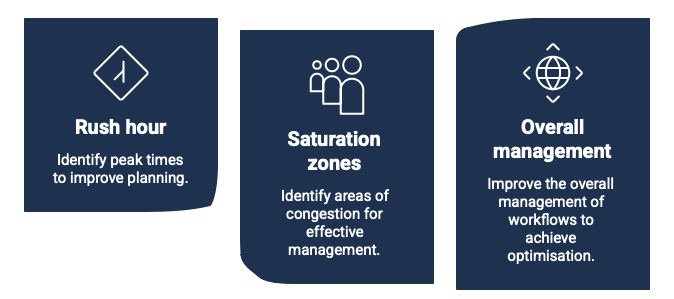
These systems also help identify:
Acorel provides advanced people counting solutions and occupancy monitoring systems tailored for festivals and large public events.
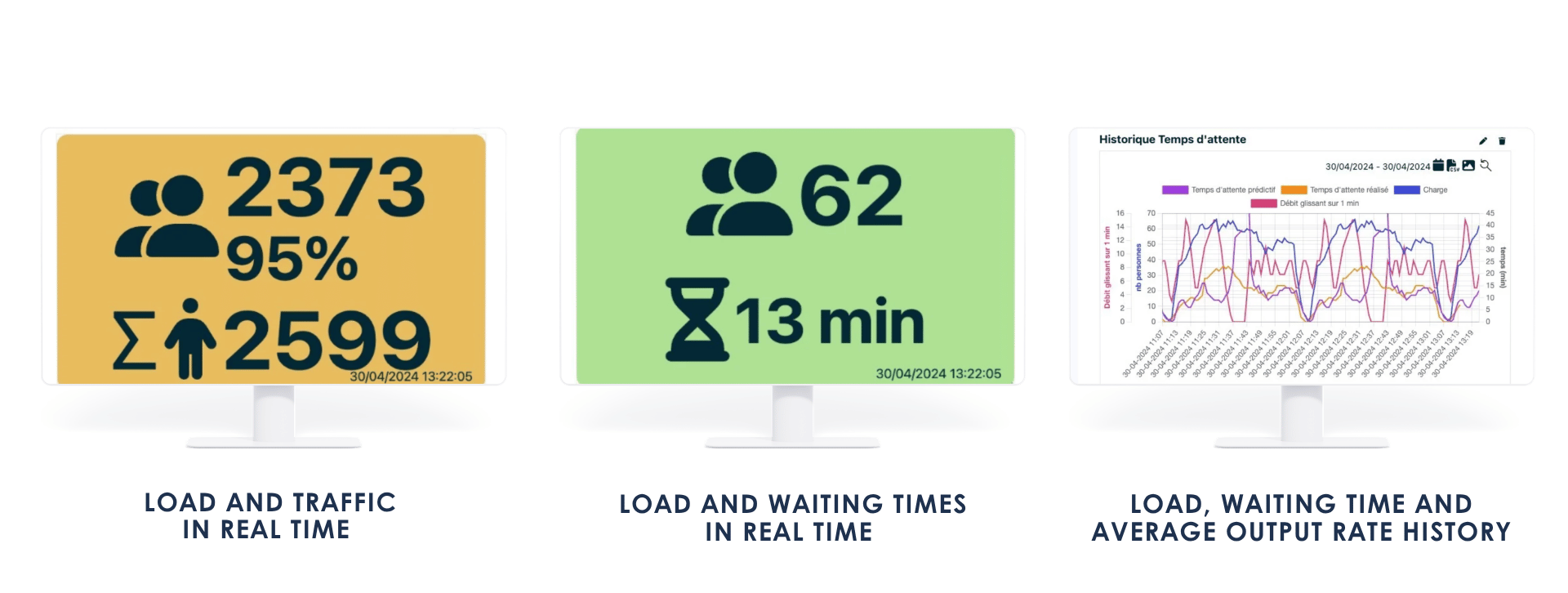
Its software suite Vision Pop is a powerful real-time monitoring platform that centralizes attendance data into a single dashboard, enabling full visibility and faster decision-making for crowd flow management at festivals.

Festival site layout and circulation design
A well-designed event layout is essential for effective visitor flow optimization.
Organizers should ensure:
- clear access and egress points,
- a structured site circulation plan,
- secondary routes to reduce congestion,
- designated overflow areas for crowd dispersion.
Effective wayfinding at events and one-way pedestrian flows significantly improve crowd comfort and reduce bottlenecks.
Reducing queues and congestion
Queue management at festivals is a key factor in improving both visitor experience and operational efficiency.
To reduce waiting times:
- increase service points,
- adapt access routes based on crowd density,
- redistribute flows across the site.
These actions help improve congestion management at festivals, reduce pressure on critical zones and enhance overall attendee satisfaction.
Continuous monitoring and real-time crowd control
During the event, real-time attendance monitoring is essential to ensure effective crowd control.
This enables organizers to:
- detect overcrowded zones,
- redirect pedestrian flow,
- open additional access points when necessary.
Collected data can then be reused to improve future crowd movement modeling and event planning strategies.
In this context, Vision Pop by Acorel acts as a comprehensive crowd monitoring platform, providing real-time insights into attendance, occupancy and visitor behavior.
Real-time communication with festival-goers
Communication is a key lever in public event crowd management, especially when powered by real-time people counting.
By leveraging live data dashboards, organizers can inform attendees about:
- waiting times,
- crowded zones,
- alternative routes and access points.
Through digital signage, mobile apps and event wayfinding systems, this communication helps improve visitor circulation, reduce congestion and enhance the overall festival visitor experience.
Case study: data-driven crowd flow optimization

At a large-scale music festival in Europe, attracting tens of thousands of visitors daily, organizers faced recurring challenges: congestion at the main entrance, overcrowding near stages and long queues at food areas.
To address these issues, they implemented a data-driven crowd flow management solution with Acorel.
Key actions implemented
- Deployment of people counting systems at strategic points.
- Real-time crowd flow analysis via Vision Pop.
- Identification of overcrowded areas and bottlenecks.
- Opening of secondary access routes.
- Optimization of the site circulation plan.
Results achieved
- Reduced queues at key entry points.
- Improved visitor flow optimization.
- Better anticipation of congestion.
- Enhanced responsiveness in crowd control operations.
This case highlights how real-time data and crowd flow analytics can significantly improve both crowd safety and visitor experience.
To conclude, managing crowd flows at music festivals is essential to ensure safety, fluid circulation and a high-quality visitor experience.
By combining pre-event planning, crowd flow modeling, real-time people counting and data-driven decision-making, organizers can transform crowd management into a true performance driver.
A successful festival is one where crowd circulation is smooth, congestion is controlled and visitors can fully enjoy the experience.
To go further, discover how Acorel can support your crowd flow management at festivals.